Three ways to build a leadership team that performs at the top of its game – and stays there.

THE PROBLEM ISN’T YOUR PEOPLE
You have brilliant people. You hired them because they perform – and on paper, they are delivering.
And underneath the dashboards, you can feel it. The leadership team is running hot. Difficult conversations are getting avoided. Communication is fraying at the edges.
Your top performers are quietly considering their exit. Engagement scores are slipping in ways your last survey couldn’t quite explain.
The problem isn’t capability. Your leaders are sharp, ambitious, committed. The problem is that they’ve been asked to drive performance and hold the culture together at the same time – and the skill set that requires has never been seriously trained.
Every leader you lose costs you money you weren’t planning to spend – on recruitment, on training the replacement, on the months of dipped performance while the new person finds their feet. Every friction you leave unaddressed costs you a little more of the trust that holds the team together.
Friction isn’t the enemy. Pretending it isn’t there is.
WHAT YOU’RE ACTUALLY AFTER
A leadership team that performs and models the culture you want to build.
Specifically:
- A leadership team aligned in values and mindset – so the message at the top is the same message at every level below it.
- Leaders who can name friction in the room rather than work around it. Who can have hard conversations without breaking trust.
- A team that’s resourceful under pressure – always solution-focussed, always one step away from a way forward, never stuck in the problem.
- Leaders who understand the science of top-performance and have the tools to apply it – consistently, not only when they’re feeling fresh.
- Retention of your best people – because they feel met, challenged, and trusted by the leadership above them.
- A culture where excellence and fulfilment coexist.
You don’t want another one-off workshop that lands well in the room and changes nothing the following week. You want change that holds.
WHY CONSISTENCY IS WHAT MAKES THE CHANGE LAND
Real change in a leadership team doesn’t come from learning concepts. It comes from integrating them – and that takes time, repetition, and trust.
Trust is what allows a leadership team to do the actual work. The work of naming what’s been left unsaid. Of leaning into friction rather than pretending it isn’t there.
Of admitting where they’re stuck and finding a different way through. None of this happens in a single session, no matter how good the session is. It happens because the team meets again, and again, and again – and the container holds.
That’s why every option I offer is structured over time. The arc matters. The repetition matters. The space between sessions – where the team takes what they’ve learned and applies it to a real, sticky situation at work – matters most of all.
Consistency is how concepts become culture.
THE METHODOLOGY UNDERNEATH THE WORK
This is The Choose Method – my integration of psychotherapy and coaching, refined over eleven years of private practice with top-performers. It combines:
- Experiential learning – leaders learn by doing, reflecting, and applying in the room.
- Coaching-style facilitation – building self-awareness and ownership, not compliance.
- Psychological safety – creating a container where leaders can actually be candid, open, and human with one another.
Most therapists go deep and skip the action. Most leadership trainers drive action and skip the depth. I do both – and it’s the integration that makes the change hold.
THREE WAYS TO WORK TOGETHER
I offer three options because real change requires a real commitment – and commitment looks different depending on where your team is, what your budget allows, and what you’re trying to build.
All three are structured over time. All three deliver results. The deeper the engagement, the deeper the integration – and the more your team gets to take with them.
FAQS
Most frequent questions
Is this therapy or leadership training? My leadership team aren't coming in to talk about their feelings.
It’s neither one thing nor the other – and that’s exactly the point. Most leadership training drives action and skips the depth. Most therapy goes deep and skips the action. I do both, and it’s the integration that makes the change hold.
Your team won’t be lying on a metaphorical couch. They’ll be working through real leadership challenges, building the skills to navigate friction and pressure, and learning the science of top performance. The psychotherapy training in the background means I can see what’s actually going on underneath the dynamic – the patterns, the avoidance, the things that aren’t getting said – and work with them in ways most facilitators simply aren’t equipped to. The result is change that sticks, not insight that evaporates on the Monday morning.
We've done leadership training before and it didn't land. Why would this be different?
Because one-off workshops, no matter how good the session is, rarely hold. What changes a leadership team isn’t the concept – it’s the integration of it. That takes time, repetition, and a container that builds trust.
The structure here is designed for that. Sessions are spaced over months, not crammed into a two-day intensive. The team comes back again and again – and between sessions, they take what they’ve learned and apply it to the real, sticky situations actually waiting for them at work. That’s where the change happens. Not in the room. In the return to the room.
My team are already high performers. Do we really need this?
The problem isn’t usually capability – it’s the invisible cost of leaving everything else unaddressed. Difficult conversations that keep getting avoided. Communication that’s fraying at the edges. Top performers who are quietly considering their exit. Engagement that’s slipping in ways the last survey couldn’t quite explain.
The highest-performing teams in the world aren’t just talented – they’re cohesive. They can name friction in the room rather than work around it. They have the tools to stay connected under pressure. That’s what this work builds. And it tends to be the teams who are already performing well that get the most from it – because the foundations are already there, and the growth from here is the kind that compounds.
What does a session actually look like?
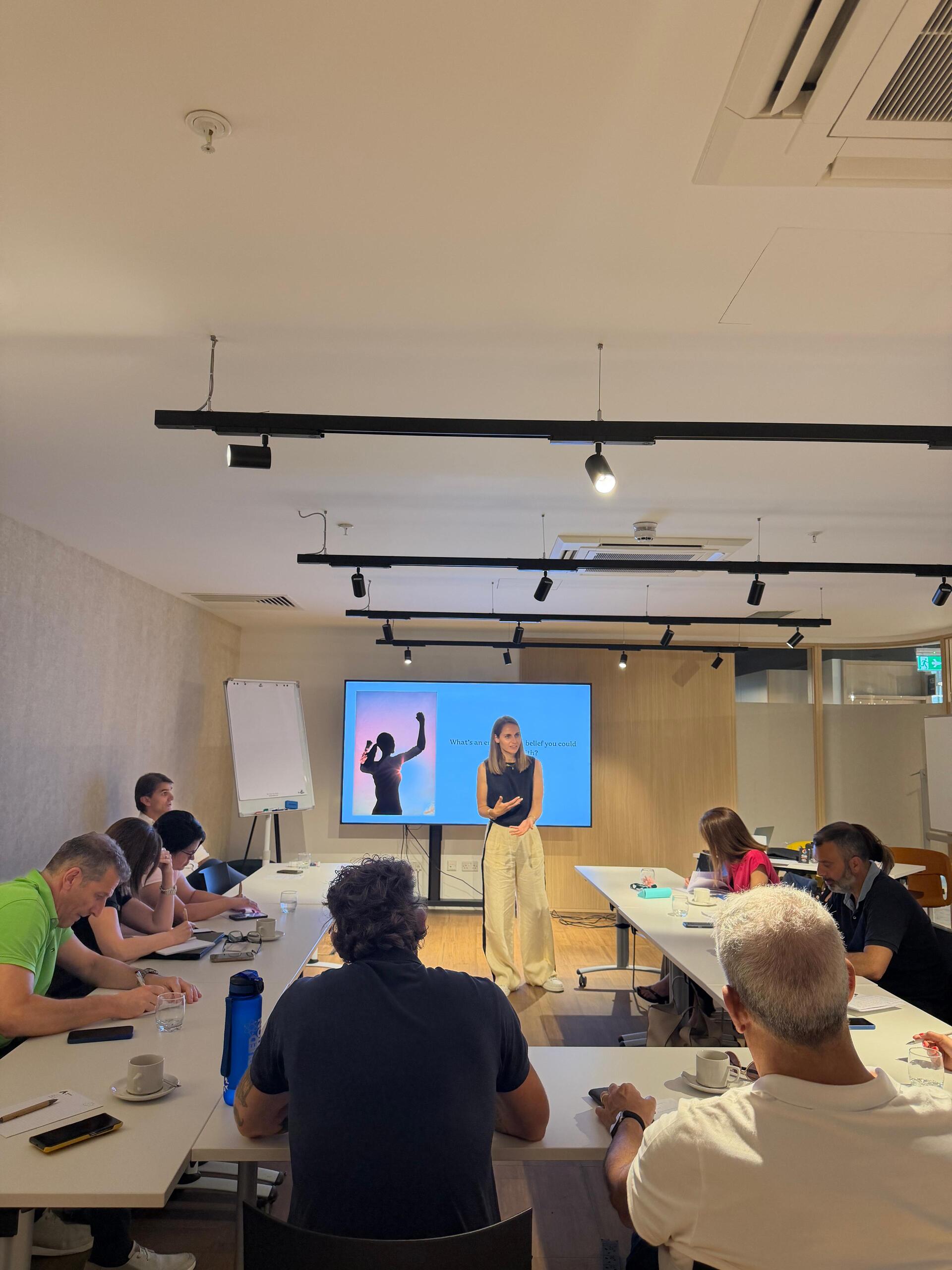
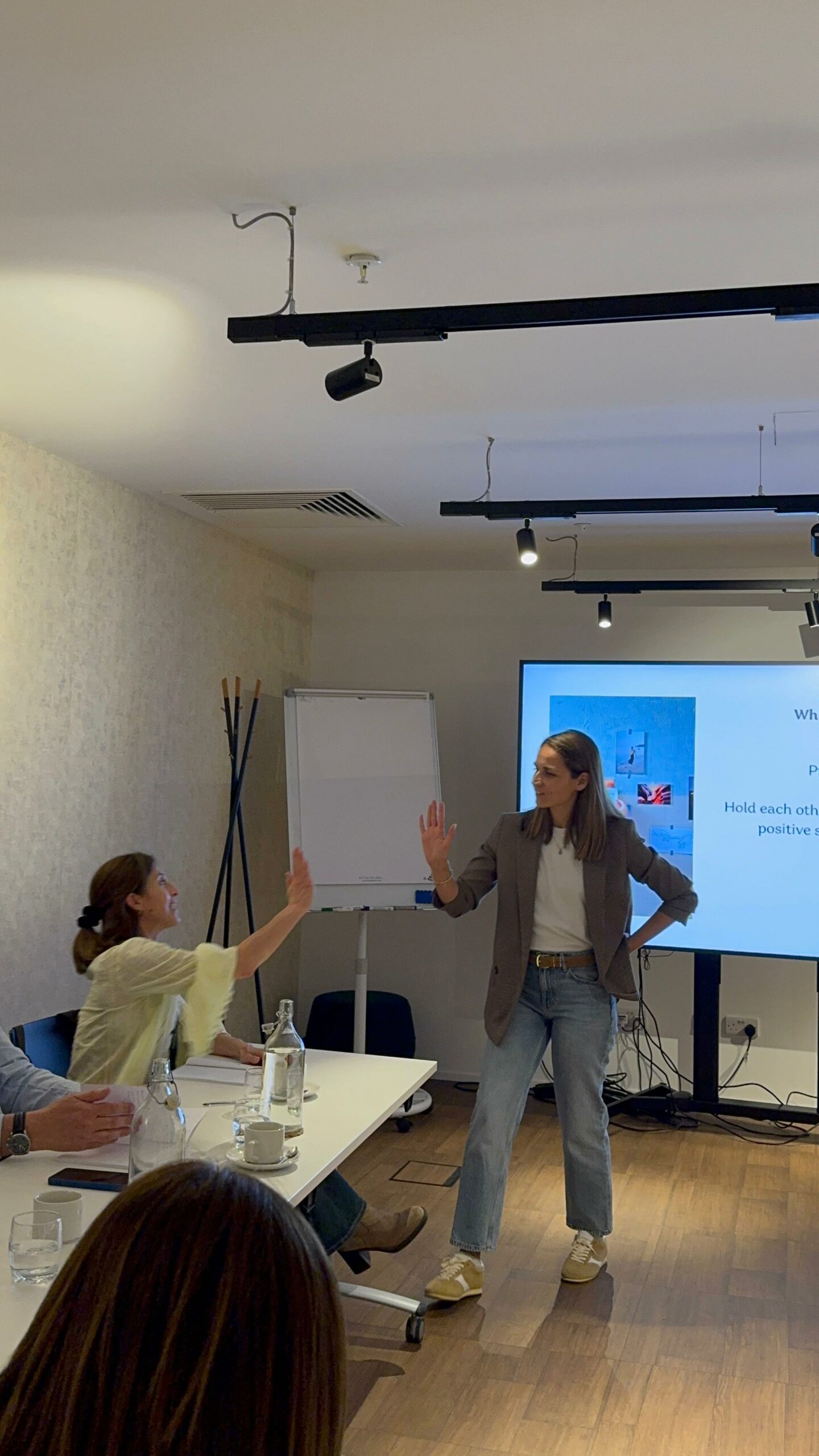
Each session is experiential – leaders learn by doing, reflecting, and applying, not by sitting through a presentation. We’ll work with real dynamics, real challenges, and real friction that’s present in the room. I facilitate rather than lecture, which means the team does the actual thinking, not just the listening.
Sessions are held with the full leadership team together. Option 3 (Top-Performance Embedded) also includes individual coaching sessions, which run alongside the group work and give each leader a private space to go deeper on whatever is most alive for them.
What methodology underpins the work?
This is The Choose Method – my integration of Gestalt psychotherapy, existential therapy, NLP coaching, the neurobiology of change, and lifestyle strategy, refined over eleven years of private practice with top-performers.
Gestalt in particular is worth naming, because it shapes how I work with groups. It’s a relational, present-focused approach that takes seriously what’s happening between people in the room – the dynamics, the unspoken things, the moments of friction or disconnection. That’s where the most important leadership work actually lives.
Why is the minimum engagement six months? Can we not start with a single workshop?
You can – but I want to be honest with you about what a single session can and can’t do. It can shift the energy in the room. It can introduce a new frame. It can start a conversation. What it can’t do is change the way a leadership team actually operates – because that’s a function of time, not a single good day.
Six months is the minimum because real integration requires the team to meet the work, leave, apply it, and return. The space between sessions is where the concepts become habits. Three sessions over six months gives a team enough runway to begin to feel the shift – not just remember it from the day.
Why does the Embedded option require a two-year minimum commitment?
Because lasting cultural change isn’t a programme – it’s a practice. Two years is the commitment it takes to weave something into how a company actually runs, rather than how it runs in the quarter after the training finished.
It’s also the option I’d recommend for any leadership team that’s serious about retention. The cost of losing your best people is always higher than the cost of keeping them well-supported, challenged, and met. Two years of embedded support doesn’t just develop the team – it becomes part of what makes the team want to stay.
What if we're in a particularly busy period and can't commit to a long programme right now?
That’s worth sitting with for a moment – because in my experience, the teams that feel too busy to do this work are often the ones who need it most. Busyness without the foundations of mindset, communication, and cohesion is usually the thing creating the friction in the first place.
That said, the Top-Performance Reset (three sessions over six months) is the lightest-touch option, designed precisely for teams who need to come back to centre without overhauling everything at once. If timing genuinely isn’t right, I’m happy to have a conversation and plan ahead.
What if someone leaves the leadership team partway through the programme?
It happens – and the work is designed to hold regardless. The skills, the shared language, and the culture the team builds together don’t leave with one person. If a new leader joins mid-programme, we can discuss the best way to bring them into the container. In the Embedded option in particular, there’s enough ongoing structure to absorb that kind of change without losing momentum.
How many people can be in a session?
The work is best suited to a core leadership team – typically somewhere between four and twelve people. Enough to generate real group dynamic, not so many that candour becomes impossible. If your leadership team sits outside that range, get in touch and we can talk through what would work.
Can sessions be run remotely, or are they in-person only?
Both are possible. In-person sessions tend to create a deeper container, particularly in the early sessions when trust is still being built. For ongoing or embedded work, a mix of in-person and remote can work well. This is something we’d agree on together before the programme begins.
How do we know this will actually work? What's the ROI?
The honest answer is that I can’t guarantee outcomes – because this is leadership development, not a formula. What I can tell you is that the methodology is built on eleven years of private practice with top-performers, and the results I see consistently are clearer communication, improved cohesion under pressure, better retention, and leaders who are better resourced to handle the hard stuff – without it costing the trust of the team.
The ROI calculation worth running isn’t “what does this cost” – it’s “what does it cost us when a top performer leaves, or when friction goes unaddressed for another quarter.” The investment in the work is almost always smaller than the cost of the alternative.
How will we see that something has changed?
The shift tends to show up in a few ways. Difficult conversations that were getting avoided start getting had – and they go better than people expected. There’s more candour in the room, and less energy being spent managing around the things that aren’t being said. Individual leaders start to notice more about their own patterns under pressure, and they have tools to do something different.
Over time – particularly in the Integrated and Embedded options – you’ll see it in the culture. The way the team handles something hard becomes the thing that defines them, not the thing they recover from.
What about confidentiality? I'm concerned about what comes up in the room staying in the room.
Confidentiality is foundational to this work. What gets said inside a session stays inside the session. I work to the same professional and ethical standards I hold in my private psychotherapy practice – which means nothing about your business and people gets shared with anyone outside of it.
Part of what makes the work possible is that people feel safe enough to be honest. That only happens if they trust the container. Building and holding that trust is a core part of what I do.
What are your qualifications? What makes you the right person to do this work?
I’m a warranted Gestalt-trained psychotherapist with eleven years of private practice, working specifically with top-performers. I use an integrated approach of Gestalt psychotherapy, existential therapy, NLP coaching, the neurobiology of change, and lifestyle strategy.
The psychotherapy training is what differentiates this from most leadership work. It means I can recognise what’s actually happening underneath the conversations – the patterns, the avoidance, the unspoken dynamics – and work with them directly. Most leadership facilitators aren’t trained to do that. The result is that your team leaves each session changed, not just informed.
How do we get started?
Get in touch directly, and we’ll have a conversation about where your team is, what you’re trying to build, and which option makes most sense for you.
Email: hello@alifeichoose.com